July 2, 2026
How to sell to B2B buyers who hate AI-generated content
AI can write your content, but it can't earn trust for your product. In 2026, trust is the one thing deciding which startups get distributed or get filtered out. Watch the full breakdown.
Key Takeaways
- —Why users are fleeing X for Reddit and Substack
- —"Uncomfortably human" marketing playbook
- —Audience vs. Community
- —B2B buyers' behavior
- —A quick diagnostic to find your startup's trust gap
Transcript
43% of users no longer trust most online content. Eighty-two percent of consumers are concerned about the societal impact of AI. Content perceived as AI-generated suffers engagement penalties of 20% to 35% compared to human-created content.
We are in a trust collapse. And if you're building a startup right now, this isn't just a branding problem — it's a distribution problem. Because in a low-trust environment, trust itself becomes the channel.
Trust will be the ultimate currency for B2B buyers. Buyers are navigating economic uncertainty, cost pressures, and a flood of AI-generated content. They're demanding transparency, validation, and measurable outcomes.
A research analysis published this year calls it the "Collapse of Digital Trust in the AI Era." The core finding: authenticity and verifiable human presence are now the dominant drivers of engagement, conversion, and brand loyalty.
According to Gartner data, nearly half of consumers now prefer brands that avoid using generative AI in customer-facing content altogether. A New York Post survey this year found that fifty-four percent of Americans are already experiencing AI fatigue.
This is real. The market has developed antibodies against AI-generated everything. Overly polished, synthetic content triggers skepticism — lower click-through rates, higher bounce rates. People can feel when something was made by a machine, and they're responding by disengaging.
Seventy-nine percent of people prefer human engagement over AI in service contexts. That preference translates directly into business outcomes. The companies that feel human are winning. The ones that feel automated are being filtered out.
Most founders think of trust as a brand metric. Something soft. Something you measure in NPS scores or brand sentiment surveys.
In 2026, trust is a distribution metric. Here's what I mean.
Your content used to reach people through algorithms that rewarded volume and engagement. Post more, reach more. That system is breaking down — partly because the algorithms are drowning in AI-generated content, and partly because users are migrating to platforms where trust and community replace algorithmic distribution.
Reddit is growing. Discord is growing. Substack is growing. What do these platforms have in common? They distribute content through trust networks — communities, recommendations, reputation — rather than engagement algorithms.
If your brand isn't trusted, you don't get distributed in these environments. Nobody recommends a product they don't trust. Nobody shares a post from a brand that feels automated. Nobody mentions you in a Discord channel if they're not confident you're real.
In the old model, distribution was a function of budget. How much can you spend on ads, on SEO, on content production? In the new model, distribution is a function of trust. How many people believe in what you're doing enough to carry your message for you?
That changes everything about how you go to market.
So how do you actually build trust that functions as distribution? Four things.
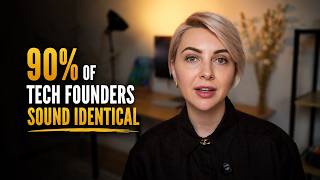
First: show the humans. Your team, your founder story, your process, your failures, your real decisions. The research is consistent — people trust human interaction more than automated systems. In an era of AI-generated everything, the most radical marketing move is being visibly, uncomfortably human. Unpolished video outperforms polished video. Real stories outperform case studies. A founder talking directly to camera — like this — outperforms a brand video with stock footage and a voiceover.
Second: earn recommendations. Seventy-nine percent of buyers consult peer recommendations before purchasing. In B2B specifically, what people say about your brand when you're not in the room now carries more weight than anything you say about yourself. This means: make your existing users so confident in your product that they recommend it without being asked. That requires genuine product quality — but it also requires emotional connection. People recommend things they feel good about, things that made them feel smart for choosing them.
Third: build in public — with substance. Sharing your journey isn't enough. Everyone's sharing their journey. The differentiation is sharing how you think. Your decision-making process. Your frameworks. Your actual opinions — the ones that might be wrong, the ones that might lose you followers. The point is to give people enough signal to decide whether they trust your judgment. If they do, they'll trust your product.
Fourth: invest in community, not audience. An audience watches. A community participates. The difference matters because community members are active distribution agents — they share, they recommend, they defend, they explain. Building community is slower and harder than building an audience. It's also dramatically more valuable in a low-trust environment, because every community member is a trust signal for every potential user who discovers you.
Here's a quick diagnostic I use with founders.
Ask yourself: if someone googled my product right now, what would they find beyond my own website? Are there real people talking about me in spaces I don't control? Would a skeptical buyer feel reassured or more suspicious after doing their own research?
If the only positive things about your product come from you — your website, your ads, your social posts — you have a trust gap. The market is now sophisticated enough to recognize self-promotion and discount it automatically.
The goal is earned trust. Third-party validation. Organic mentions. Community discussion. These are now your distribution channels, whether you invested in them or not. If you didn't invest — you don't have distribution. No matter how much you're spending on ads.
The market moved. Attention is scarce. Skepticism is the default. AI-generated content is everywhere.
In this environment, the startups that win won't be the ones with the biggest ad budget or the most aggressive content calendar. They'll be the ones that people actually trust.